If you’ve noticed your hair looking sparser at the crown, your scalp showing through more than it used to, or your ponytail feeling noticeably thinner in your hand — welcome to one of the most common hair challenges for women over 50. Thin hair (fewer overall strands) is different from fine hair (thinner individual strands), though they often occur together. The good news is that the right hairstyle can make a remarkable difference.
This guide will walk you through the best hairstyles for women over 50 with thin hair, along with the styling techniques and product choices that will give your hair the appearance of real density and fullness.
Understanding Thin Hair vs. Fine Hair
It’s worth clarifying the distinction. Fine hair refers to the diameter of each individual strand — fine strands are thinner in circumference. Thin hair refers to density — the number of strands on your scalp. You can have thick individual strands but low overall density, or fine strands at high density. Many women over 50 experience both simultaneously.
When hair is thin, the scalp becomes more visible — especially at the crown, the part line, and the temples. The strategies for managing thin hair focus on disguising this visibility and creating the optical illusion of greater fullness.
The Best Hairstyles for Thin Hair Over 50
The Side-Part Shag
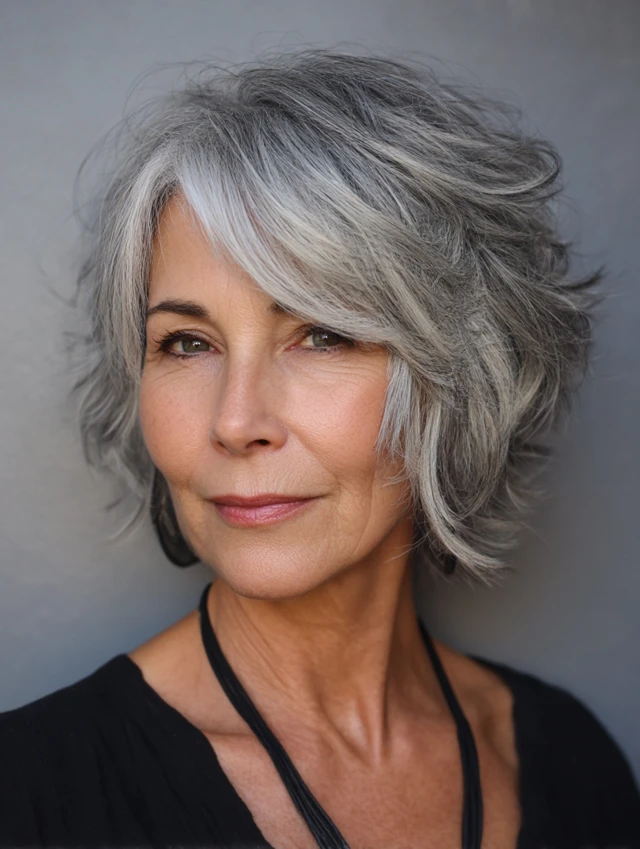
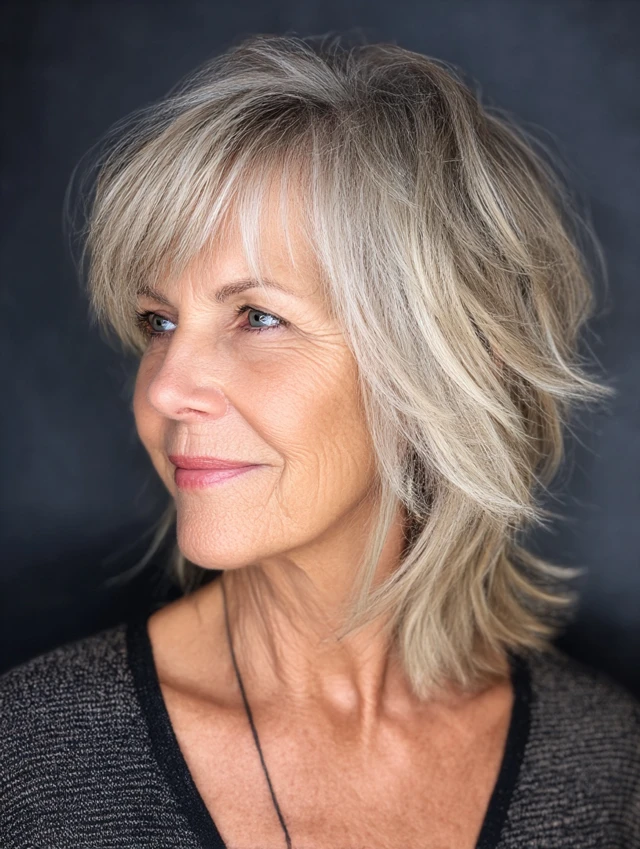
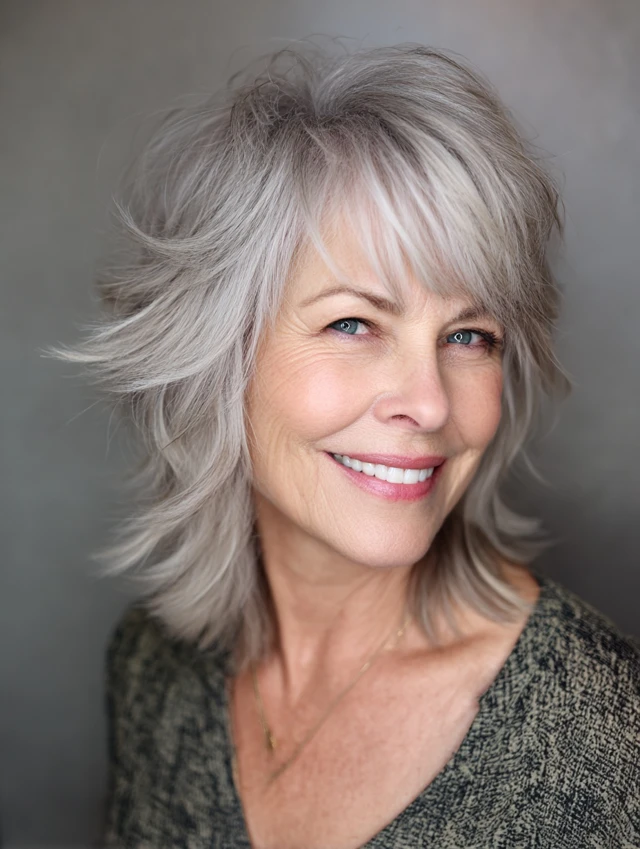
A shag cut — medium-length with lots of choppy layers — is one of the most effective cuts for thin hair. The layers create movement and visual texture that makes the hair appear much denser. Combined with a deep side part that sweeps hair across the scalp, it also disguises any visible parting at the crown.
1
2
3
4
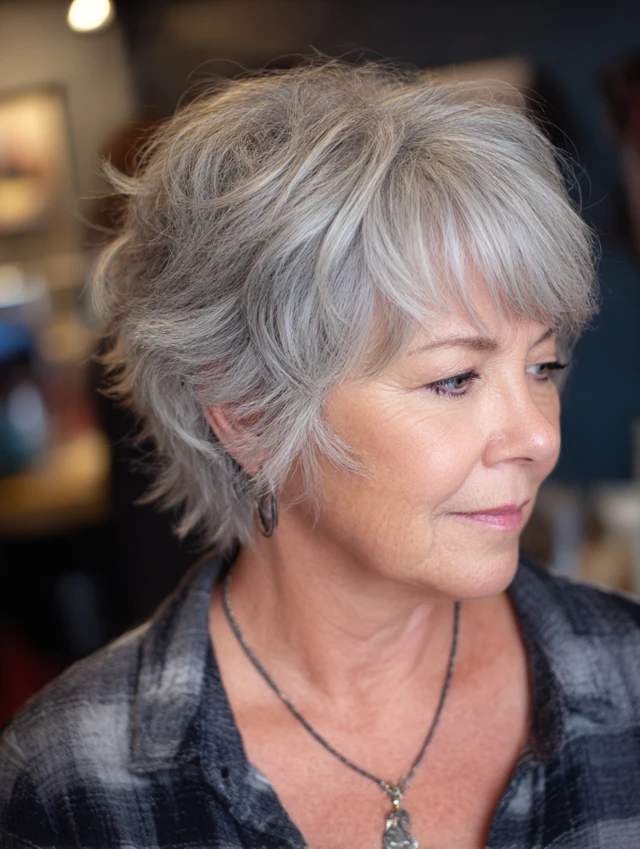
Curtain bangs work beautifully with a shag for thin hair. They add a framing layer at the front that creates the appearance of more hair around the face.
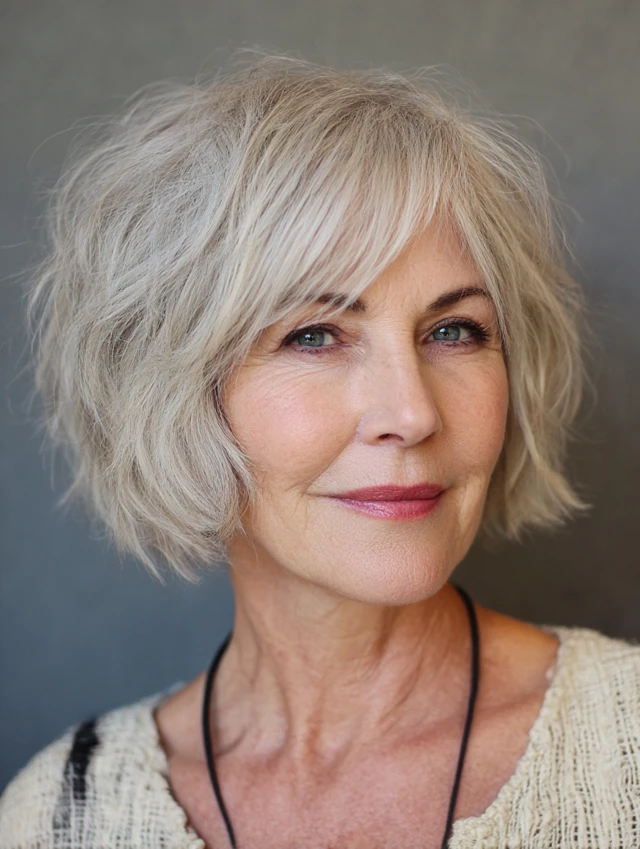
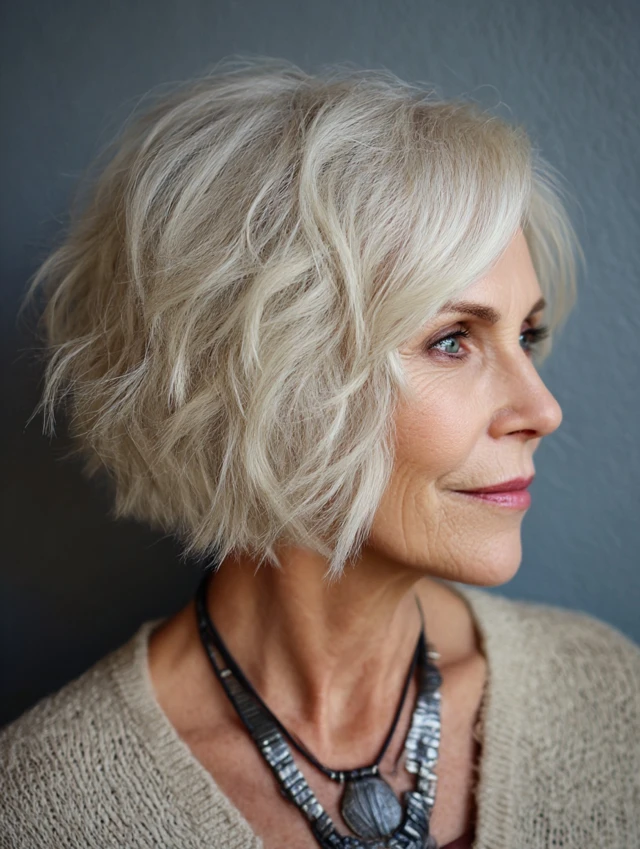
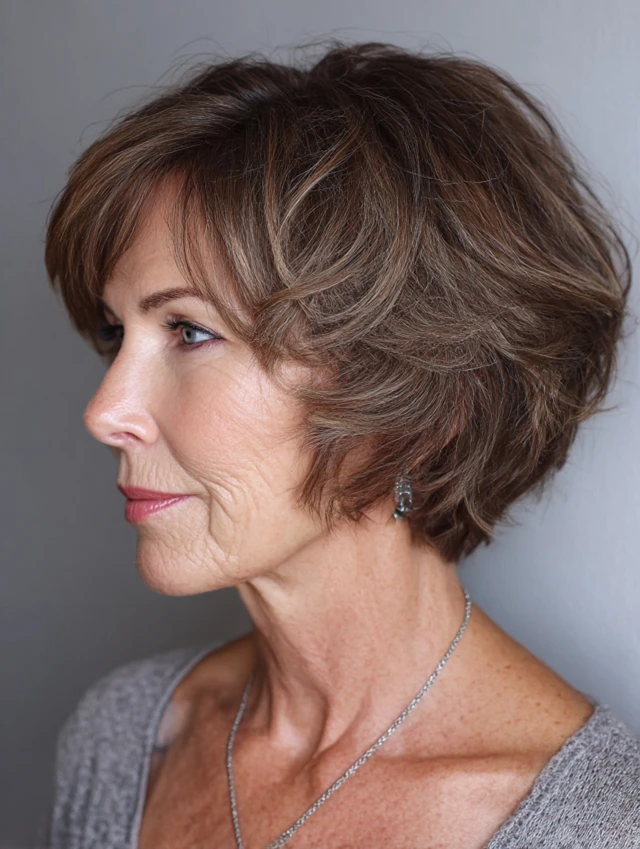
The Textured Bob
A chin-length bob with internal layering and textured ends is excellent for thin hair. The bluntness of a classic bob can add some weight and apparent density, while the layers prevent it from looking flat.
1
2
3
4
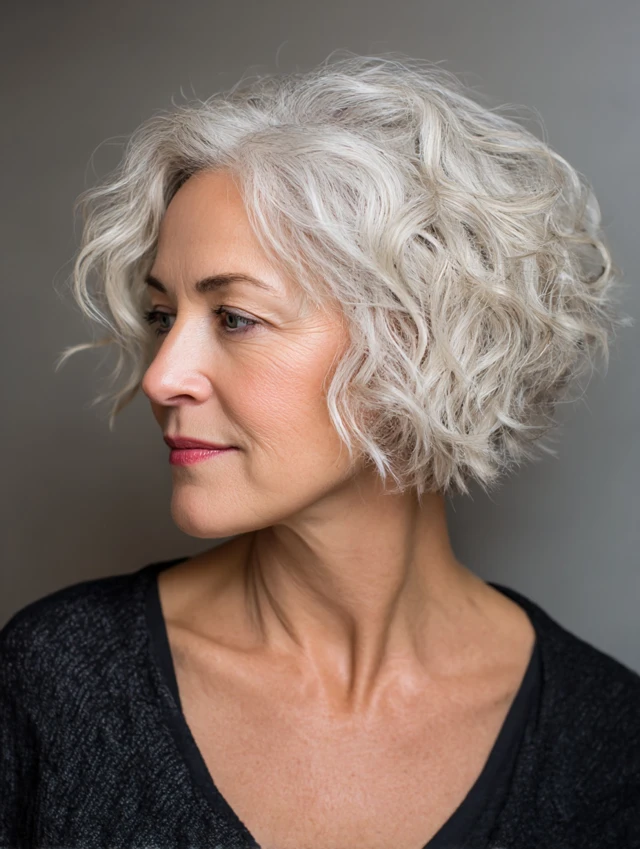
Ask your stylist to point-cut or razor-cut the ends rather than cutting them straight across. This creates micro-texture throughout the cut that adds to the illusion of fullness.
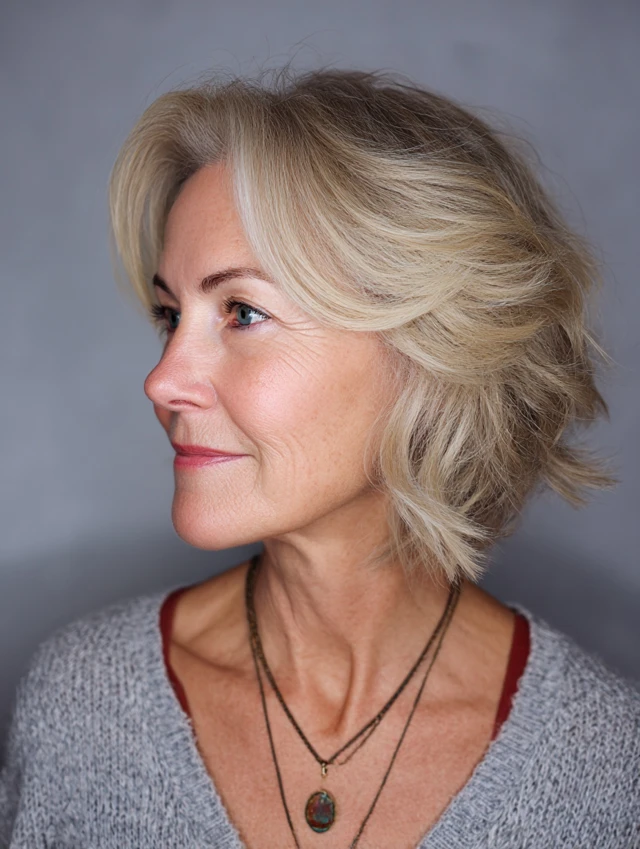
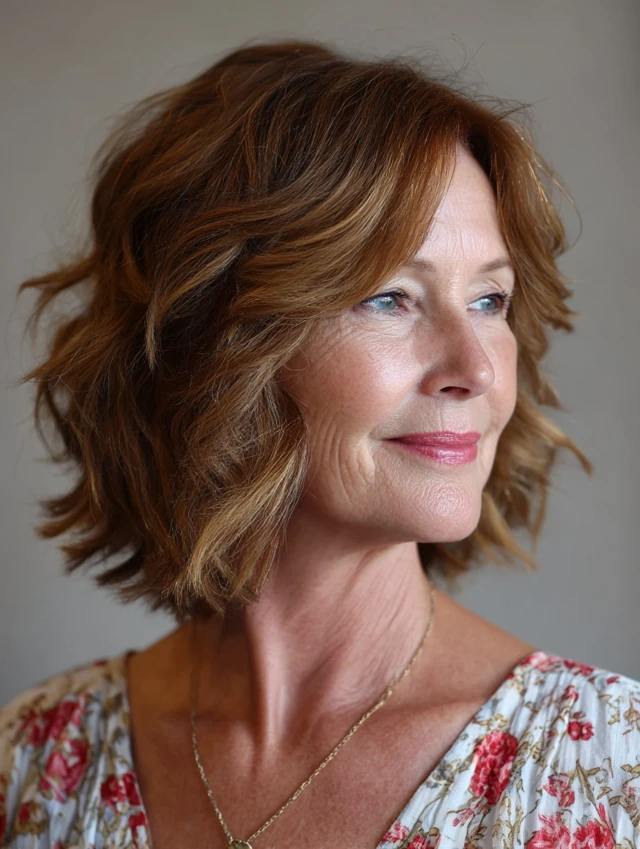
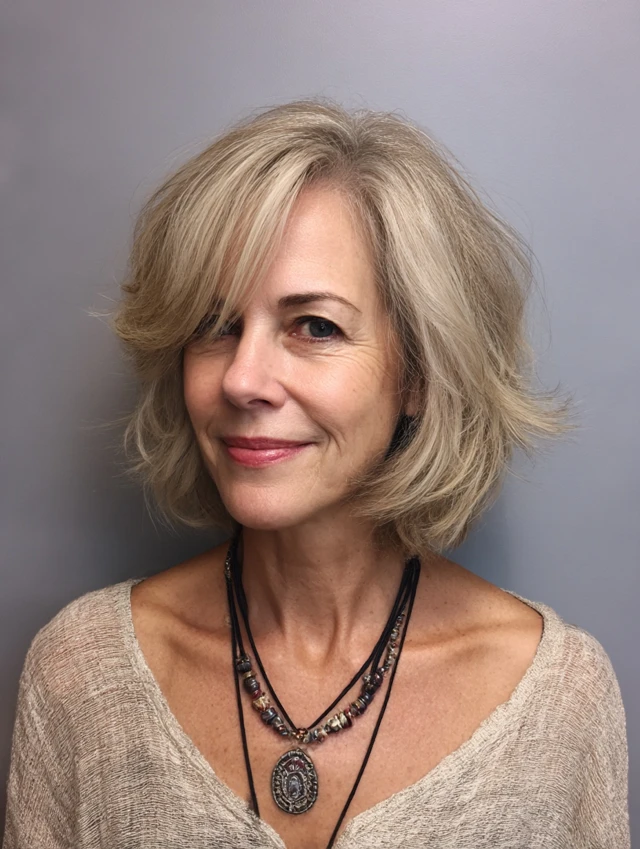
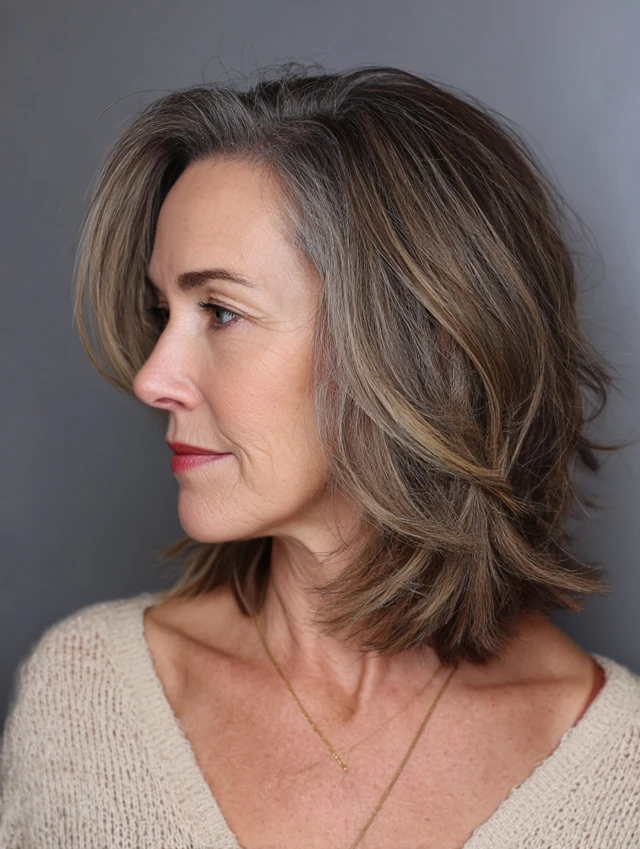
The Collarbone Lob with Layers
A lob that hits at the collarbone is long enough to retain some weight (which helps disguise the scalp) while being short enough that the hair doesn’t drag flat. Multiple layers throughout keep it from becoming too heavy at the bottom.
1
2
3
4
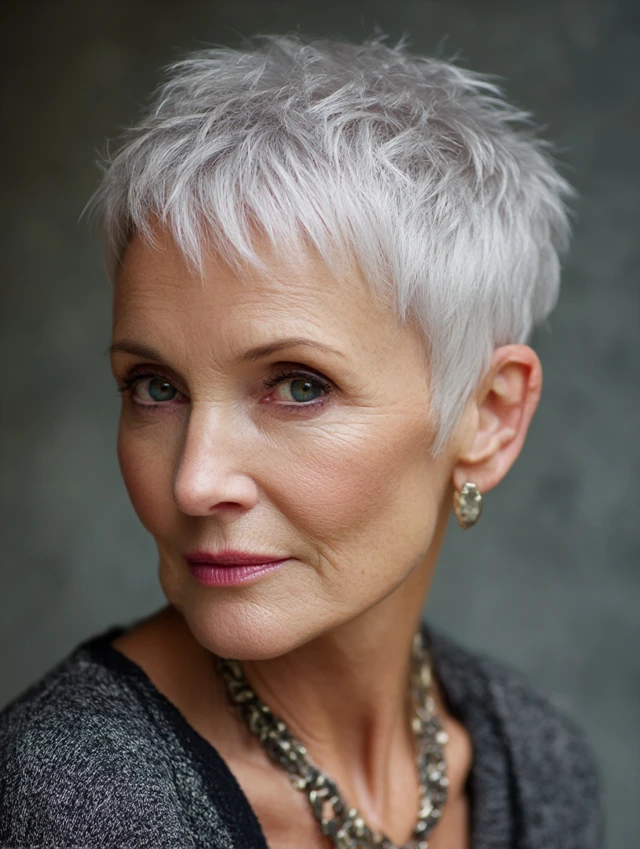
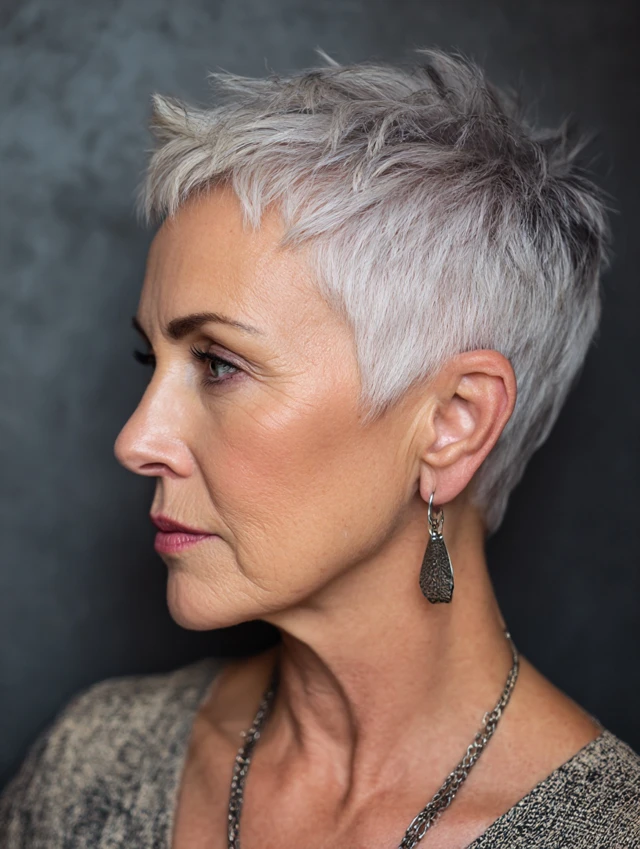
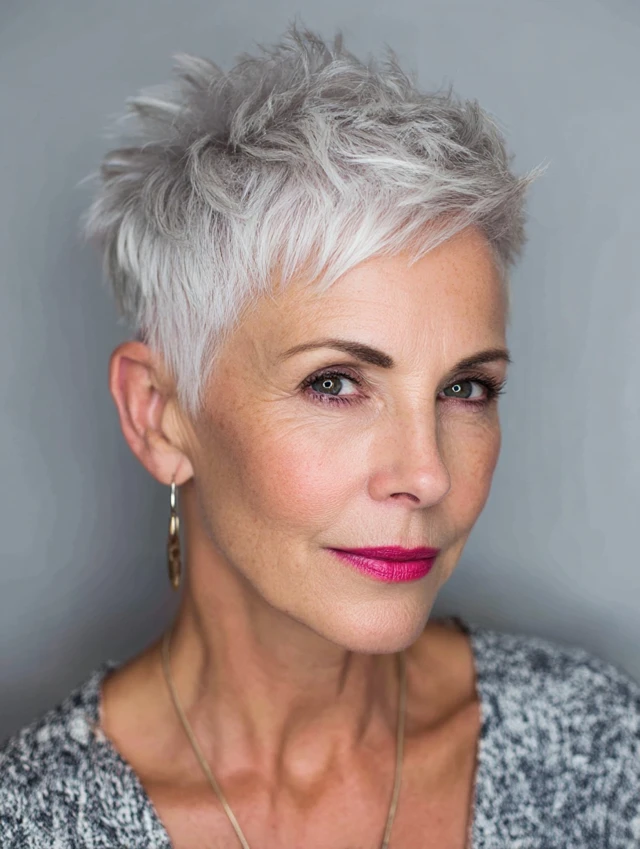
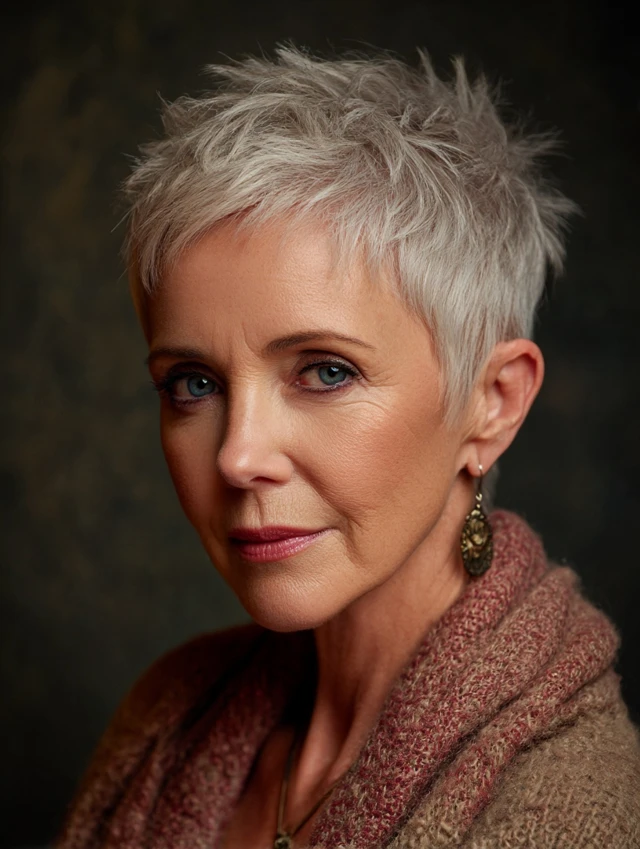
The Short Pixie
For women who prefer short hair, a pixie is one of the most effective options for thin hair. Short hair has less gravity pulling it flat, so what volume you do have stays closer to the head and looks more impactful. A pixie also draws the eye to your facial features rather than your hair density.
1
2
3
4
Styling Techniques That Create the Illusion of Density
Master the Side Part
A deep, dramatic side part is one of the easiest and most effective ways to disguise a thin crown. It moves the parting off-center, sweeps more hair across the top of the head, and creates natural-looking volume on the fuller side.
Tease (Gently) at the Roots
Very gentle backcombing at the roots — particularly at the crown — lifts the hair away from the scalp and creates visible volume. Follow with a light-hold hairspray to keep the lift in place.
Use a Volumizing Spray Before Blow-Drying
A root-lifting spray applied before you blow-dry can significantly increase the height and fullness of thin hair. Concentrate the spray at the roots and the crown.
Try Scalp-Covering Products
Products like colored dry shampoos, root-cover sprays, and scalp concealers (like those from Toppik or similar brands) can minimize the appearance of visible scalp. Many women find these genuinely transformative for confidence. They’re available in a range of shades to match hair color precisely.
Color Strategies for Thin Hair
Color is a powerful ally for thin hair. These techniques are particularly helpful:
- Root Smudge or Shadow Root — Darkening the roots slightly blurs the line between scalp and hair, making the scalp less visible.
- Dimensional Color — Highlights and lowlights together create depth that makes hair appear denser.
- Avoid Very Flat, Single-Process Color — A single, flat color (especially very light blondes) can make thin hair look even more uniform and expose the scalp more than dimensional color would.
Hair Loss vs. Normal Thinning: When to See a Doctor
Some degree of hair thinning after 50 is normal. However, if you’re noticing significant or sudden hair loss, patches of thinning, or your hair density has changed dramatically in a short period, it’s worth speaking with your doctor.
Common treatable causes of hair loss in women over 50 include:
- Thyroid disorders (hypothyroidism often causes hair thinning)
- Iron deficiency anemia
- Post-menopausal hormonal changes (treatable with certain medications)
- Nutritional deficiencies (particularly protein, iron, zinc, and biotin)
There are also topical treatments like minoxidil (Rogaine) that are FDA-approved for female hair loss and can make a significant difference when used consistently.
Products That Help Thin Hair Look Fuller
- Thickening shampoo and conditioner — Look for formulas with biotin, caffeine, or keratin.
- Volumizing mousse — Applied to roots before blow-drying for fullness that lasts.
- Dry shampoo — Adds texture and grip to hair at the roots, making volume easier to create and maintain.
- Hair fibers or scalp powder — Colored keratin fibers that cling to existing strands and disguise visible scalp. Highly effective for special occasions.
What to Avoid
- Very long, one-length cuts — Length and weight make thin hair appear even sparser.
- Tight, pulled-back styles worn daily — Traction on already-thin hair can cause further breakage and loss.
- Heavyweight conditioners applied at the roots — These flatten hair and make the scalp more visible.
- Heat styling without protection — Thin hair is more vulnerable to heat damage, so always use a heat protectant.
The Bottom Line
Thin hair over 50 requires thoughtful styling choices, but it absolutely does not have to hold you back from having beautiful, confident hair. The right cut — shag, bob, lob, or pixie — combined with strategic color, smart product choices, and a few key styling techniques can make your hair look genuinely fuller.
Be patient with yourself, explore what works, and don’t hesitate to consult both a skilled stylist and your doctor if thinning has been significant. Thin hair is manageable — and with the right approach, it can look absolutely gorgeous.