Interview outfits play an important role in presenting yourself as prepared, professional, and attentive to workplace expectations. The strongest outfit should support your confidence without distracting from your experience and personality. Tailored trousers, polished dresses, structured blazers, refined skirts, and elevated separates can all create an interview-ready appearance when styled thoughtfully.
Different industries naturally call for different levels of formality. Corporate environments may favor traditional tailoring, while creative or business-casual workplaces often allow greater flexibility. These interview outfit ideas provide versatile inspiration you can adapt according to the company culture, position, season, and level of formality.
Why Thoughtful Interview Dressing Continues to Matter
Interview fashion evolves, but polished presentation remains valuable because clothing contributes to an overall first impression. Well-fitting pieces, coordinated colors, clean footwear, and understated accessories can communicate preparation without making your outfit the primary focus of the conversation.
Modern professional dressing also offers considerably more flexibility than traditional matching suits alone. Blazers can accompany dresses, trousers can work with elegant knitwear, and neutral separates can create sophisticated combinations. Choosing pieces that feel comfortable and appropriate helps you concentrate on the interview rather than repeatedly adjusting your clothing.
Monochrome Neutral Pantsuit
A monochrome pantsuit creates a streamlined interview outfit with a sophisticated, contemporary character. Charcoal, navy, taupe, or deep brown can provide professional alternatives to traditional black while maintaining the structure expected in more formal workplaces.
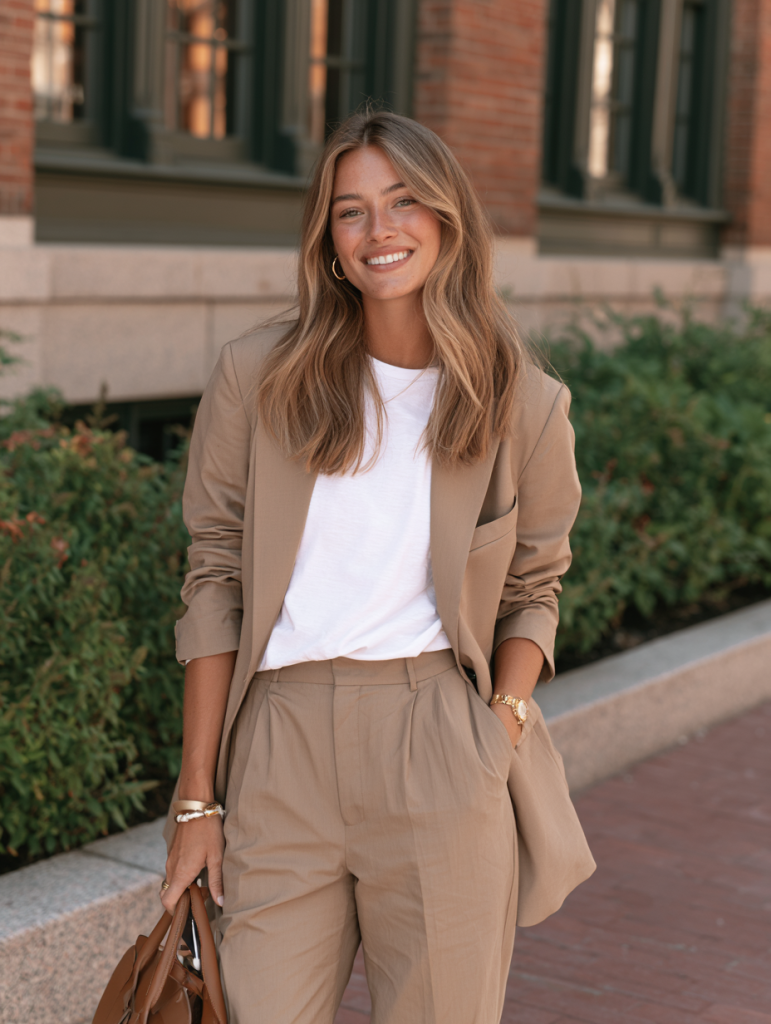
Wear a simple blouse or lightweight shell underneath so the tailoring remains the main focus. Keep footwear equally understated with closed-toe pumps, loafers, or refined flats. Minimal jewelry and a structured work bag complete the outfit, producing a cohesive appearance suitable for leadership, corporate, and client-facing interviews.
Blazer with Ankle Trousers
Ankle trousers paired with a structured blazer offer a polished option for workplaces where full suiting may feel unnecessarily formal. Choose complementary neutral shades and add a tucked blouse or refined knit top to maintain a coordinated professional appearance.
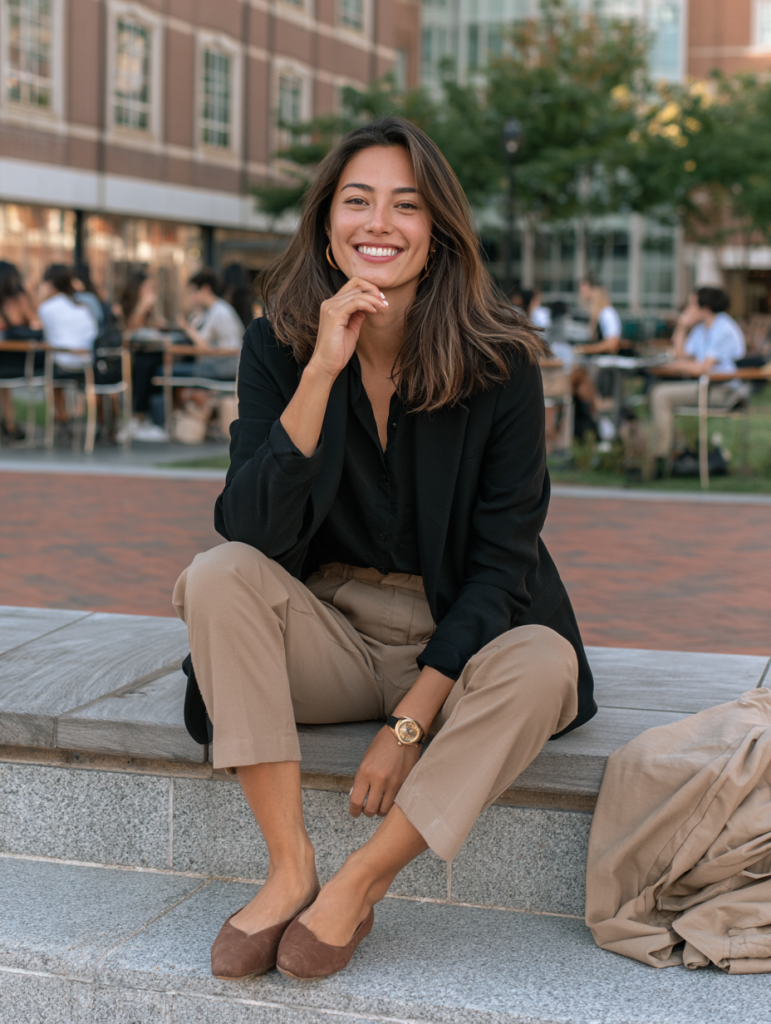
Loafers or low block heels work particularly well with the cropped trouser length. Keep the blazer comfortably fitted through the shoulders and avoid overly tight trousers so movement remains easy. This versatile combination transitions naturally between business-casual companies, office environments, and professional interviews with moderate dress expectations.
Midi Dress with Structured Blazer
A streamlined midi dress becomes interview-ready when paired with a structured blazer that adds definition around the shoulders. Choose a dress with a modest neckline and comfortable fit, avoiding excessive embellishment so the overall presentation remains professional.
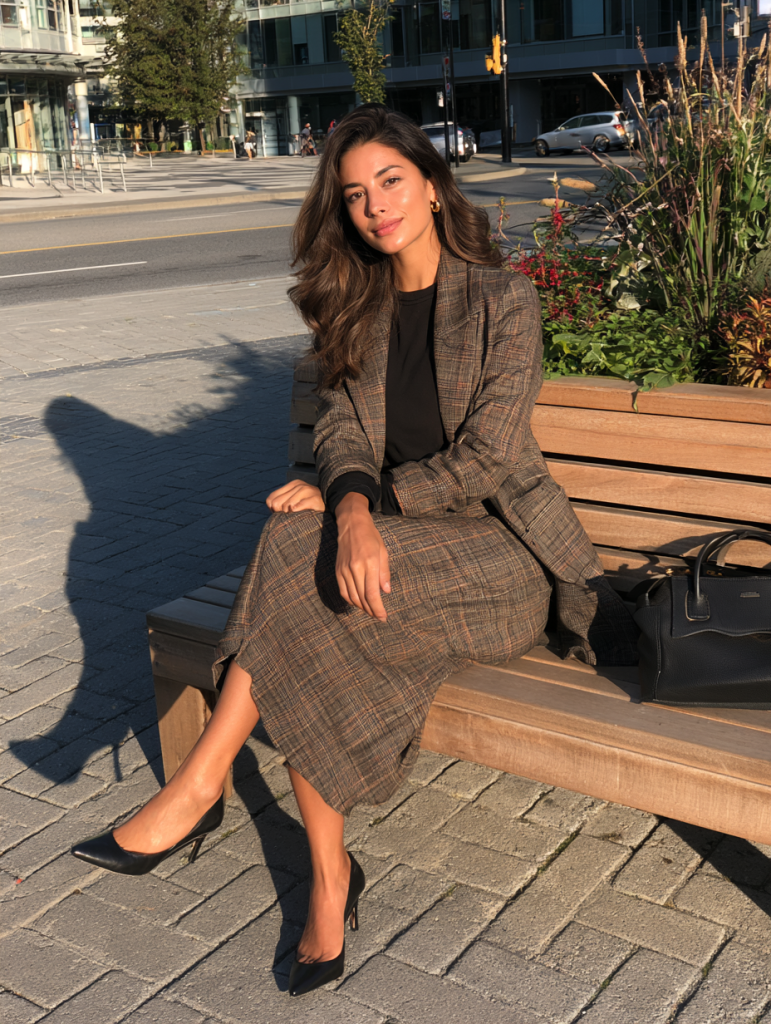
Neutral shades such as navy, charcoal, burgundy, olive, or deep brown provide plenty of versatility. Add closed-toe shoes and understated jewelry to complete the outfit. This combination offers an elegant alternative to trousers while remaining appropriate for many corporate, administrative, educational, and professional settings.
White Shirt with Wide-Leg Trousers
A crisp white shirt provides a timeless foundation for tailored wide-leg trousers, creating an interview outfit with both structure and modern proportion. Tuck the shirt neatly to define the waist and choose trousers that skim rather than overwhelm your frame.
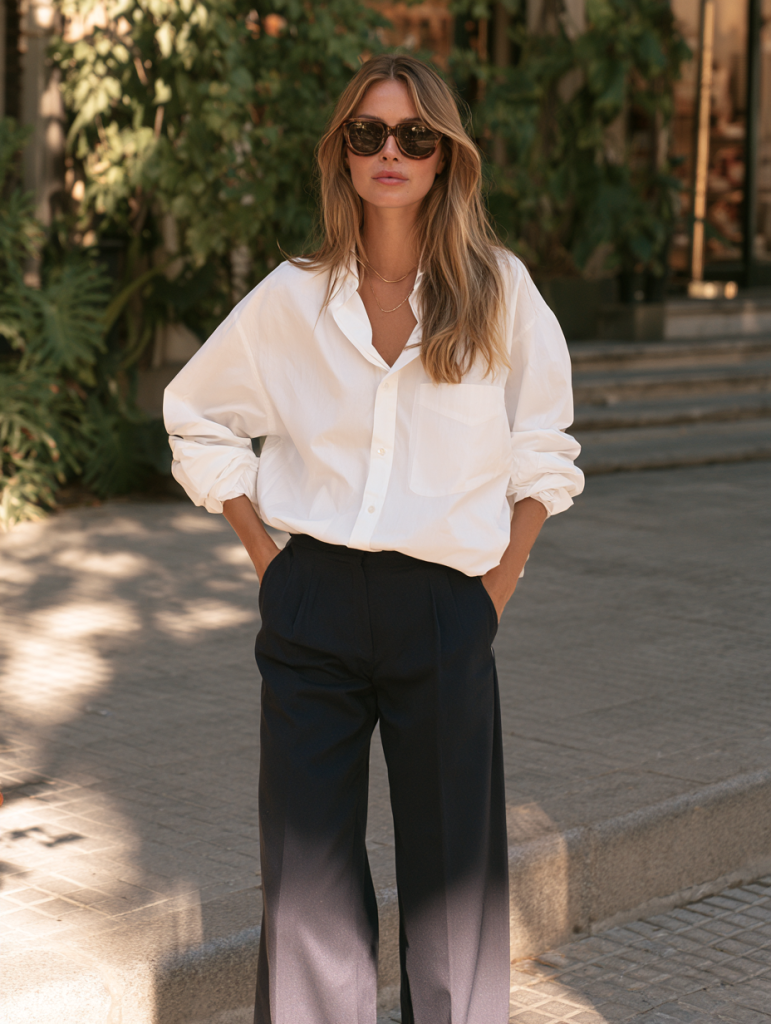
Add loafers, pointed flats, or low heels depending on the workplace’s level of formality. A simple belt can provide additional definition when appropriate. Keeping accessories restrained allows the clean tailoring to remain prominent, resulting in a professional outfit that feels confident, comfortable, and contemporary.
Pencil Skirt with Elegant Blouse
A knee-length or midi pencil skirt paired with an elegant blouse offers a refined approach to traditional professional dressing. Choose a skirt that allows comfortable movement and a blouse with clean lines, subtle texture, or understated detailing.
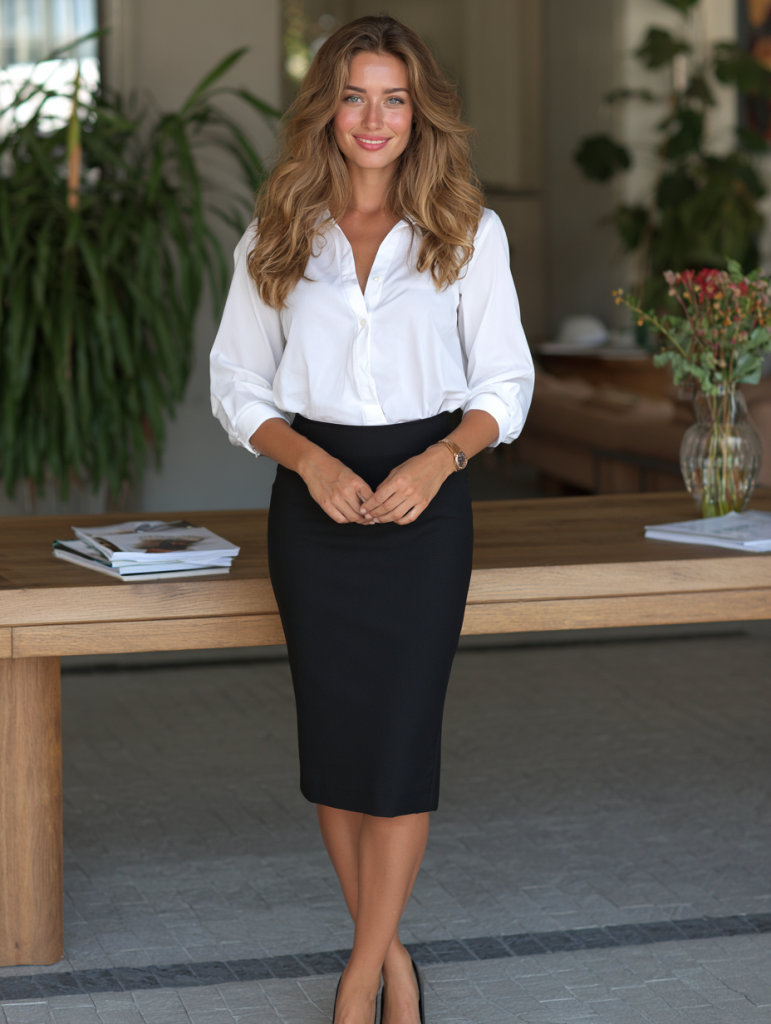
Complete the look with low pumps or sophisticated flats and a structured handbag. A lightweight blazer can be added when the interview environment requires greater formality. This combination works especially well for corporate offices, management roles, administrative positions, and other workplaces where classic business attire remains an established expectation.
Knit Top with Tailored Trousers
A refined knit top can replace a traditional blouse when you want an interview outfit that feels polished but slightly softer. Pair a fine-gauge crewneck, mock neck, or modest V-neck with tailored straight-leg trousers in a coordinating neutral shade.
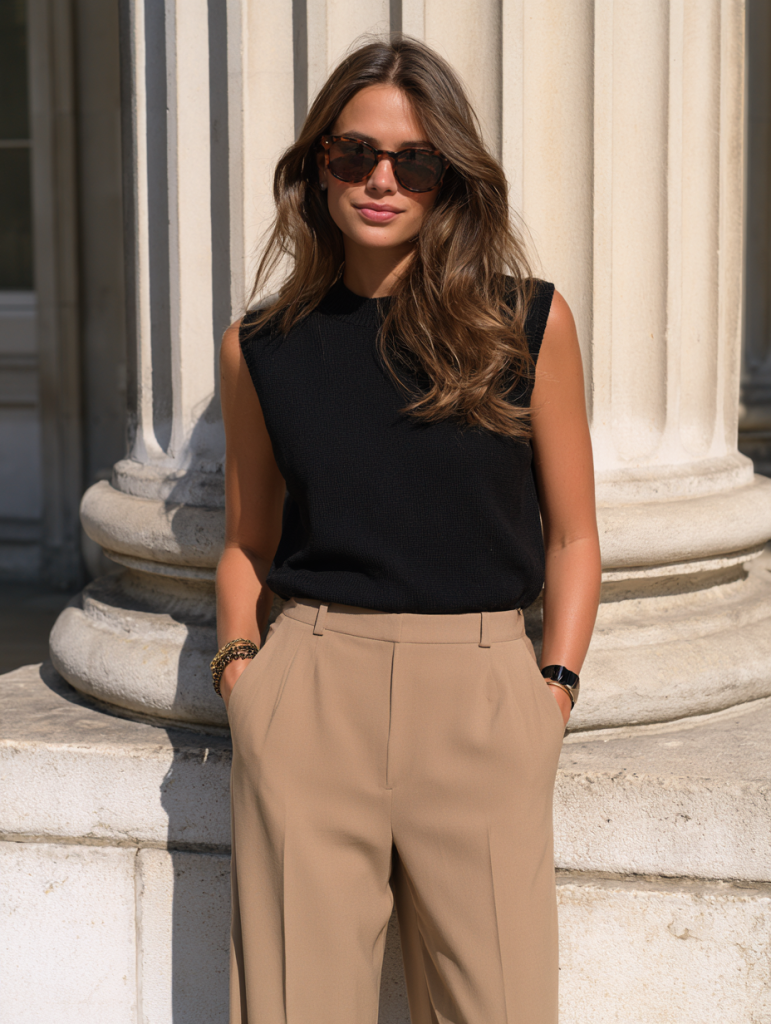
Add a structured blazer if the company culture leans formal, or leave the knit visible for business-casual environments. Loafers and low heels both complement the streamlined silhouette. Keeping the knit lightweight and neatly fitted ensures the outfit maintains a professional appearance rather than feeling overly relaxed.
Black Blazer with Gray Trousers
Combining a black blazer with gray trousers creates subtle contrast while maintaining the sophistication expected from professional interview clothing. A white, ivory, pale blue, or muted blouse underneath keeps the palette balanced and prevents the darker tailoring from appearing overly severe.
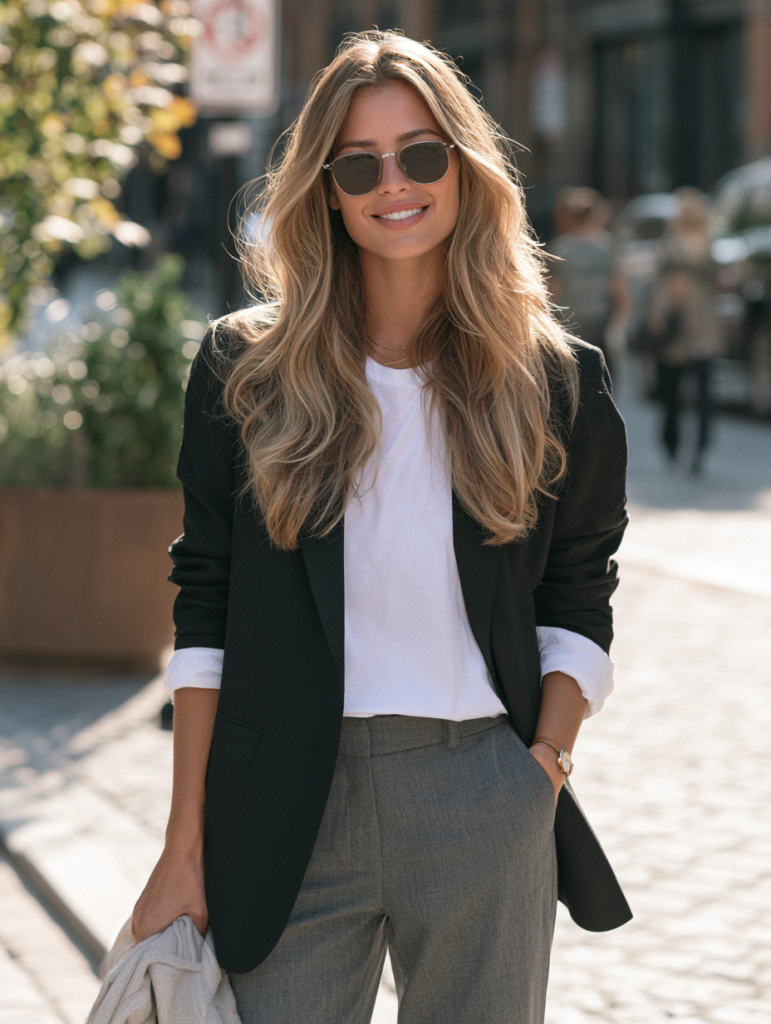
Choose streamlined footwear and avoid excessive accessories so the outfit remains cohesive. A leather tote or structured handbag can reinforce the professional finish. This combination provides useful flexibility when you want the authority of traditional tailoring without wearing a completely matching suit.
Belted Midi Dress
A belted midi dress creates a clean interview silhouette by introducing gentle waist definition while maintaining comfortable coverage. Look for structured fabrics that hold their shape and choose understated colors or subtle patterns rather than distracting prints.
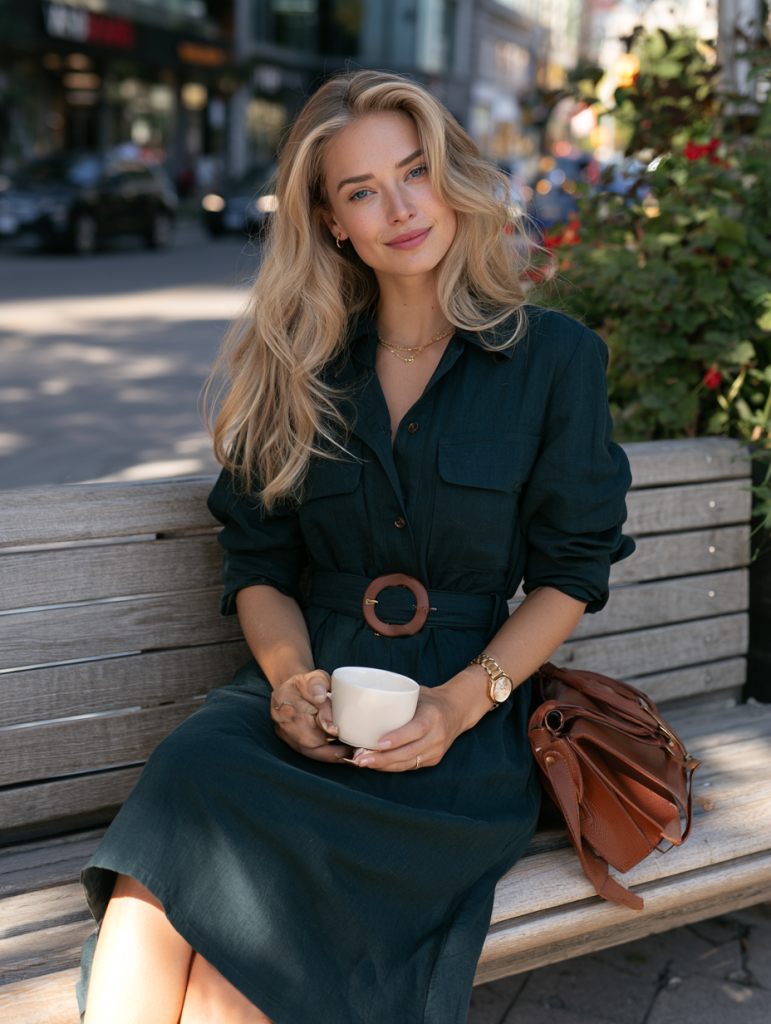
Closed-toe flats, pumps, or low block heels can complete the outfit depending on personal preference. Keep the belt simple and proportionate so it enhances the dress rather than becoming a statement accessory. This one-piece approach makes coordinating an interview outfit straightforward while still creating a thoughtfully polished and professional appearance.
Blouse with Straight-Leg Trousers
Straight-leg trousers provide a versatile foundation for interview dressing because their clean silhouette works easily with numerous blouse styles. Choose a blouse in a complementary neutral or muted shade, then tuck it neatly for a sharper, more intentional finish.
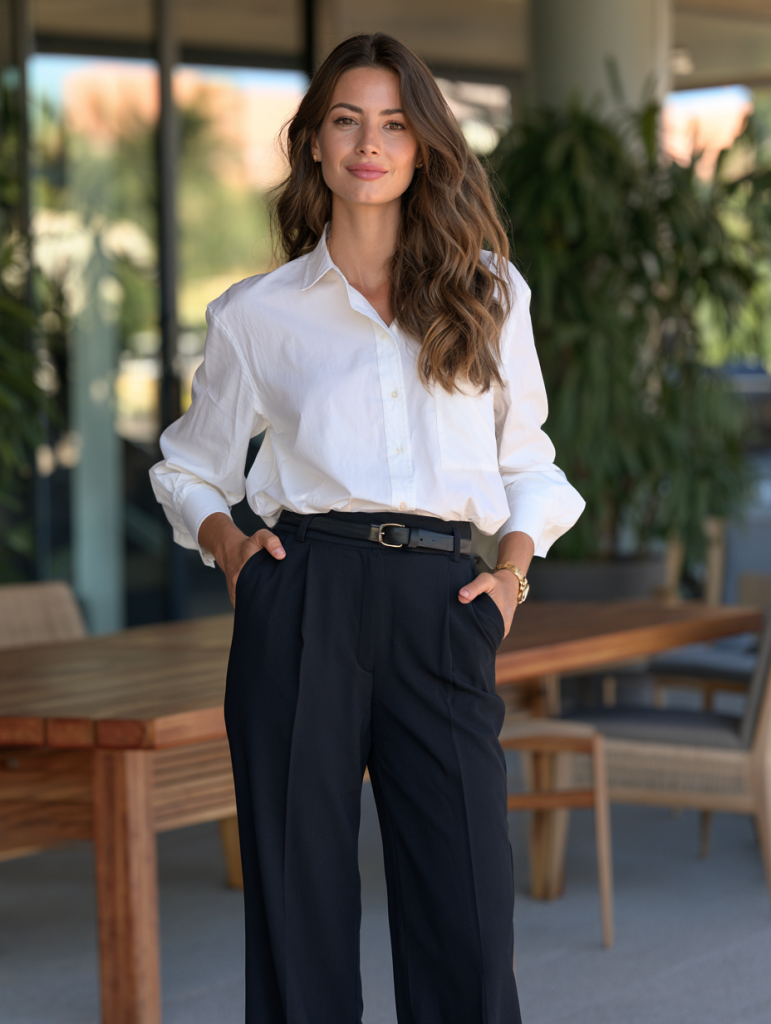
A blazer can increase the outfit’s formality when necessary, while loafers or polished flats keep the combination comfortable. Simple earrings and a structured bag are usually sufficient accessories. This uncomplicated pairing works across many industries because it looks professional without depending on particularly trend-driven pieces or complicated styling.
Cardigan with Tailored Pants
A structured cardigan paired with tailored pants offers a softer alternative to traditional blazer styling. Choose a fine-knit cardigan with clean buttons and a neat silhouette, then wear it fully buttoned or layered over a simple blouse or shell.
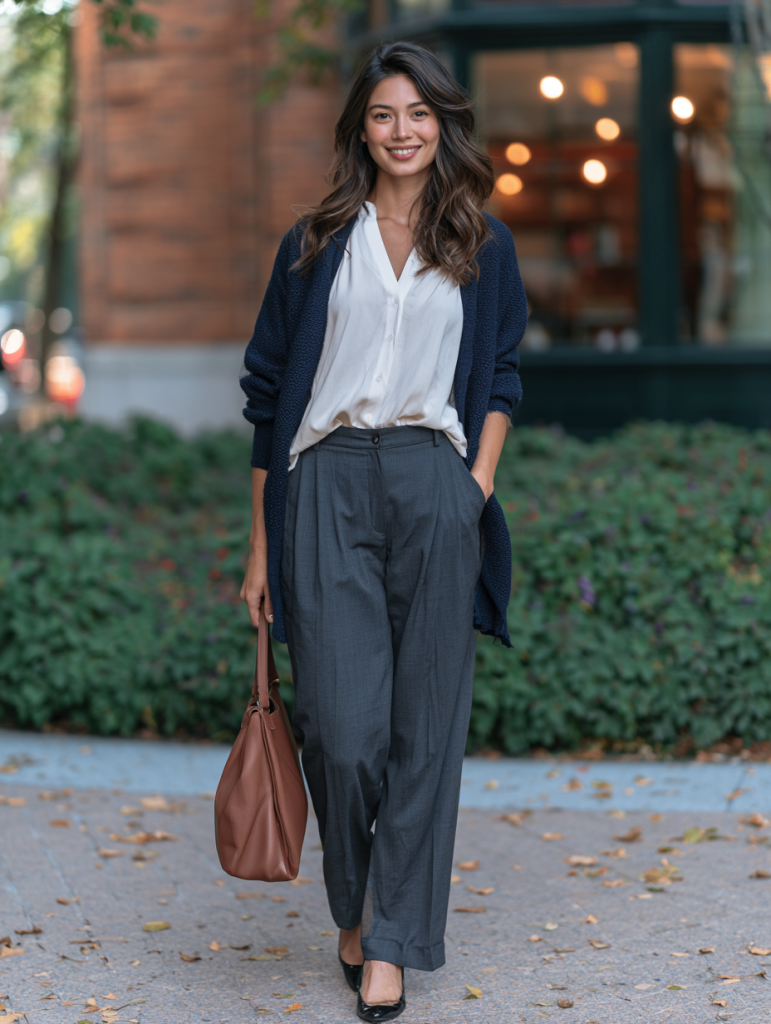
Straight-leg or gently wide-leg trousers help maintain professional proportions. Complete the outfit with loafers or low heels and minimal jewelry. This approachable combination can work particularly well for business-casual interviews, education roles, nonprofit organizations, healthcare administration, and workplaces with less formal everyday dress expectations.
Tonal Beige Interview Outfit
Combining several beige, cream, camel, and taupe shades can create a sophisticated tonal interview outfit without relying on darker traditional colors. Pair tailored trousers with a coordinating blouse and structured blazer, allowing subtle differences in shade to create visual depth.
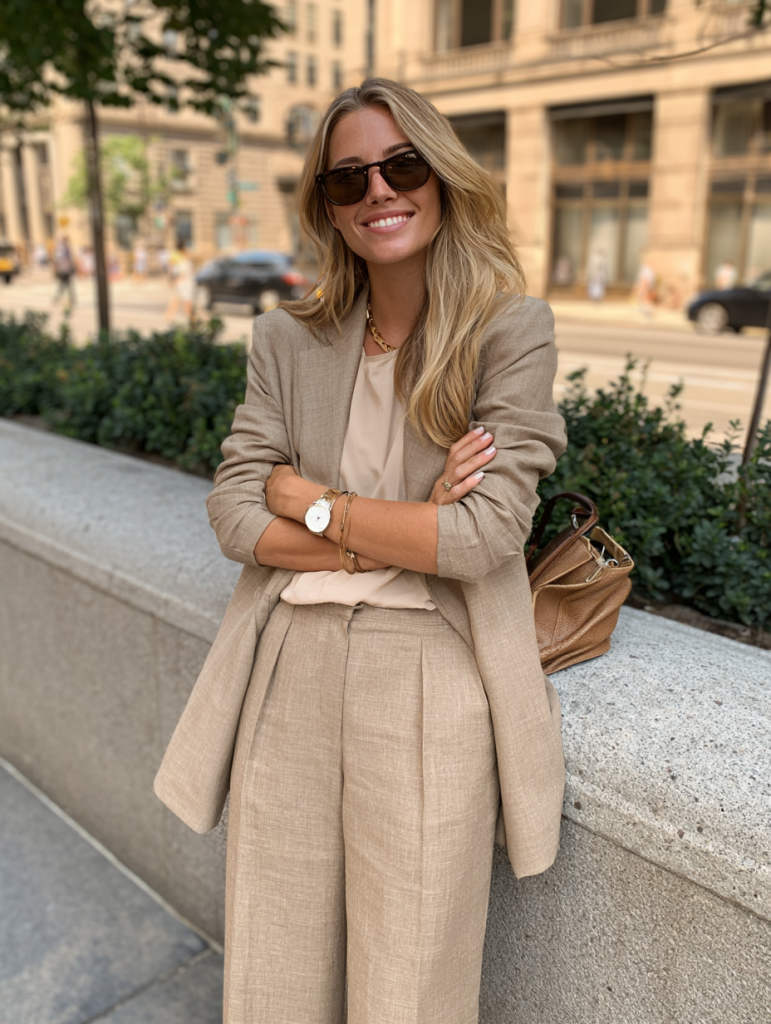
Brown or cognac footwear can complement the warmer palette while maintaining a professional finish. Choose fabrics with enough structure to prevent the lighter colors from appearing overly casual. Minimal accessories complete this refined combination, making it particularly suitable for modern offices, creative roles, and business-casual environments.
Navy Midi Skirt with Blouse
A navy midi skirt creates an elegant foundation that can feel slightly softer than trousers while remaining appropriate for professional interviews. Pair it with a tucked blouse in white, cream, pale blue, or another understated shade for clean contrast.
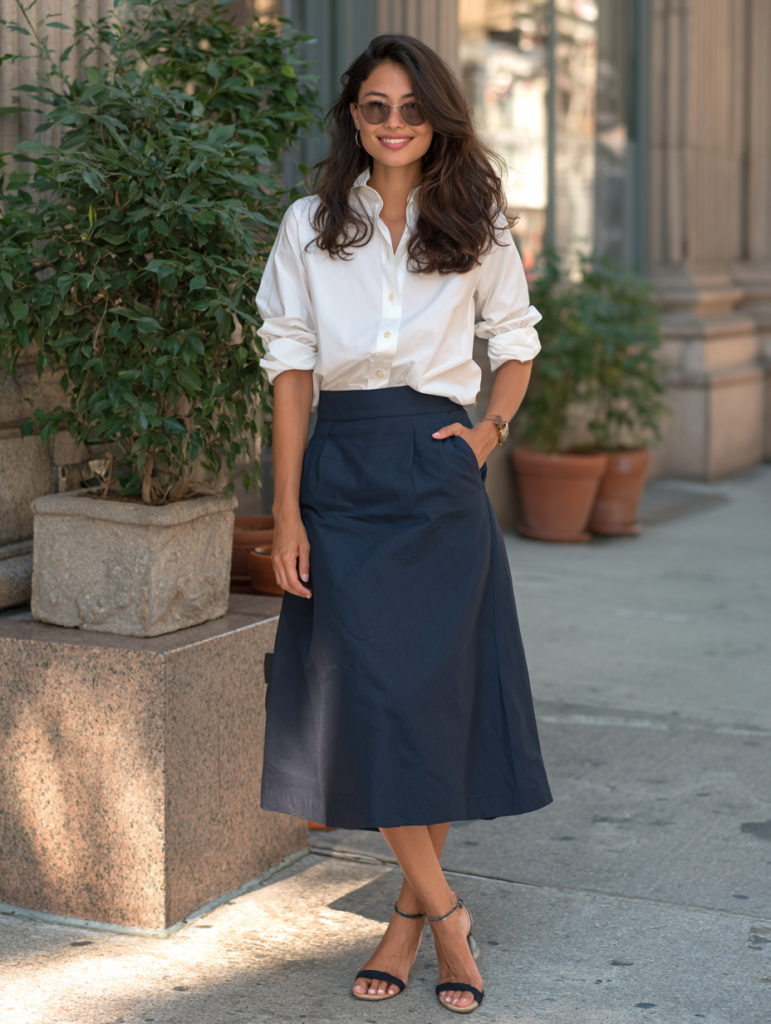
Choose a skirt with enough structure to maintain its silhouette while allowing comfortable movement when sitting and walking. Low pumps, loafers, or polished flats complete the combination effectively. Add a blazer when additional formality is appropriate, or keep the outfit streamlined for business-casual interview settings.
Dark Jeans with Polished Blazer
For genuinely casual workplaces, clean dark jeans can work when elevated with a structured blazer and sophisticated top. Choose a straight-leg pair without distressing, fading, oversized details, or decorative finishes so the denim maintains a neat appearance.
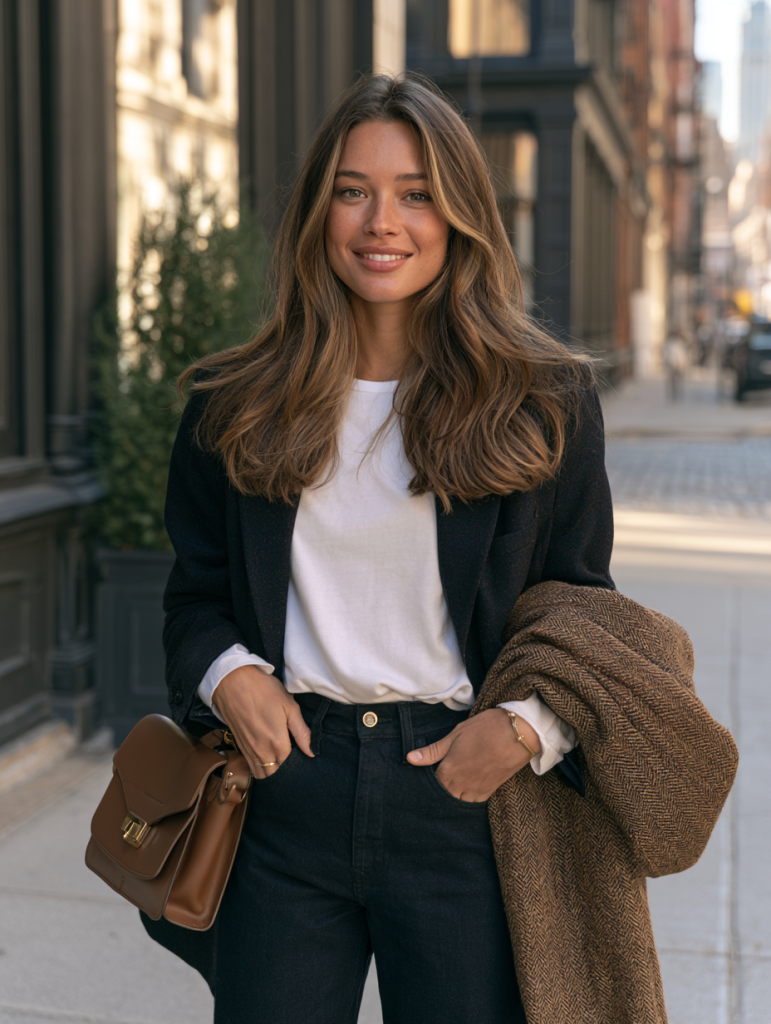
Add loafers, ankle boots, or polished flats and keep accessories simple. Researching the company’s everyday dress culture is especially important before choosing denim for an interview. When appropriately matched to the workplace, this combination communicates professionalism while acknowledging the organization’s more relaxed approach to office attire.
Matching Vest and Trouser Set
A matching tailored vest and trouser set provides a contemporary alternative to the traditional pantsuit. The coordinated pieces create visual consistency, while the sleeveless tailoring introduces a modern element that works particularly well in creative or fashion-conscious professional environments.
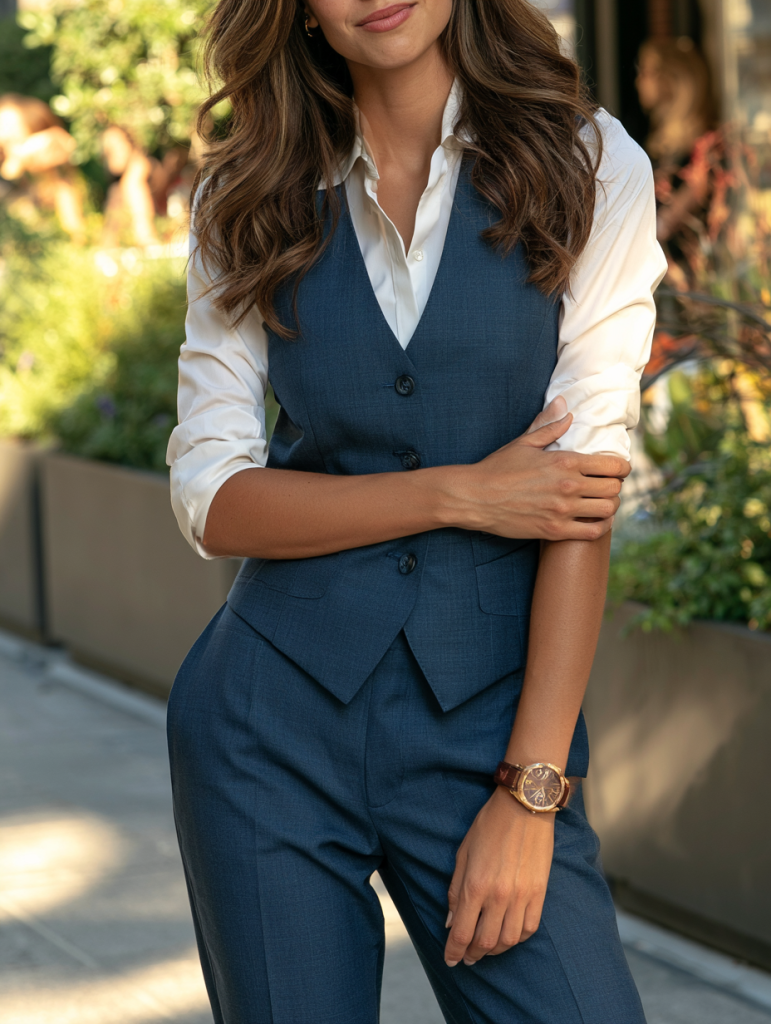
Layer a crisp shirt or lightweight blouse underneath when additional coverage or formality is preferred. Finish with loafers, pointed flats, or understated heels. Keeping the color palette neutral and accessories minimal ensures the updated silhouette still communicates professionalism rather than appearing overly trend-focused for the interview setting.
Soft Blouse with Pleated Trousers
A softly draped blouse paired with tailored pleated trousers balances fluid movement with professional structure. Choose trousers with controlled volume and a clean waistband, then tuck the blouse neatly to maintain definition through the middle of the outfit.
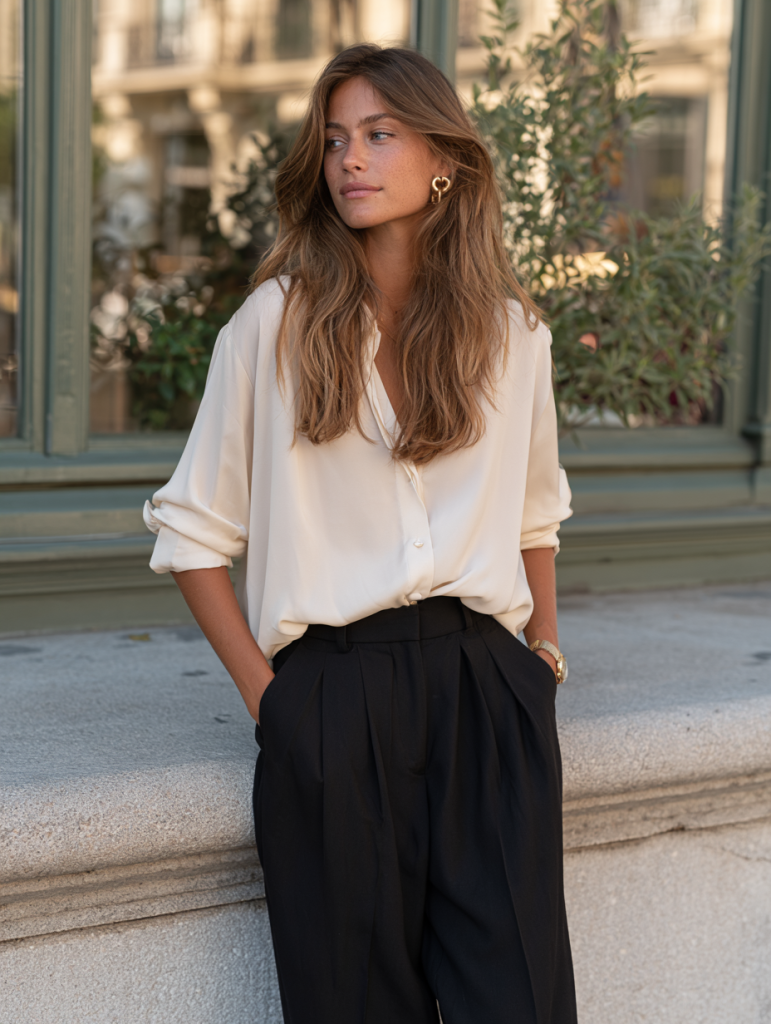
Pointed flats, loafers, or low heels can complement the longer trouser silhouette. If additional formality is necessary, add a streamlined blazer without excessive detailing. This combination provides comfort while maintaining a polished appearance, making it useful for interviews requiring extended sitting, walking, presentations, or multiple meetings.
Turtleneck with Structured Blazer
A fine-gauge turtleneck beneath a structured blazer creates a sophisticated interview outfit for cooler weather. Pair the combination with tailored trousers or a professional midi skirt, keeping the colors coordinated and understated for a cohesive appearance.
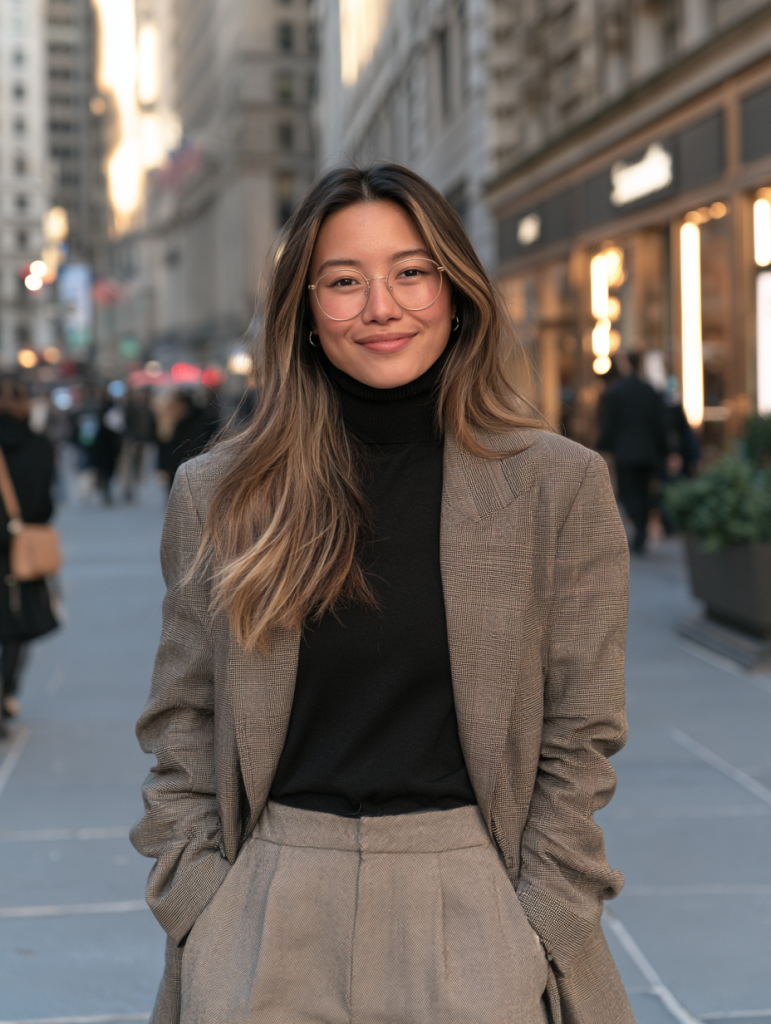
Avoid bulky knitwear because excess fabric can interfere with the blazer’s clean lines. Instead, choose a lightweight turtleneck that sits smoothly underneath tailoring. Complete the outfit with closed-toe footwear and minimal jewelry. This polished layered approach works particularly well for autumn and winter interviews in professional or business-casual workplaces.
Building an Interview Outfit That Feels Professional
Start by researching the organization’s typical dress expectations and then aim slightly more polished than its everyday standard. Prioritize fit, comfort, clean lines, and well-maintained fabrics. Your clothing should allow you to sit, walk, shake hands, and potentially give a presentation without constant adjustment.
Keep accessories intentional and relatively understated. Shoes should be clean and comfortable enough for the entire interview process, while your bag should organize necessary documents without appearing overloaded. Prepare everything the evening before, including steaming or ironing garments, so clothing decisions do not add unnecessary pressure on interview day.
Final Thoughts
The best interview outfits balance professionalism with the expectations of the specific workplace. Traditional suits remain valuable for formal industries, but polished separates, midi dresses, knitwear, and coordinated tailoring provide strong alternatives for modern business environments. Thoughtful fit and presentation usually matter more than following every current fashion trend.
Ultimately, your outfit should help you enter the interview feeling prepared rather than self-conscious. Choose clothing that supports comfortable movement and reflects the role appropriately. Which approach suits your next interview best: traditional tailoring, polished business casual, or a contemporary coordinated set?
